The White Flags of Torosiaje: How Simple Markers Shape A Different Perspective
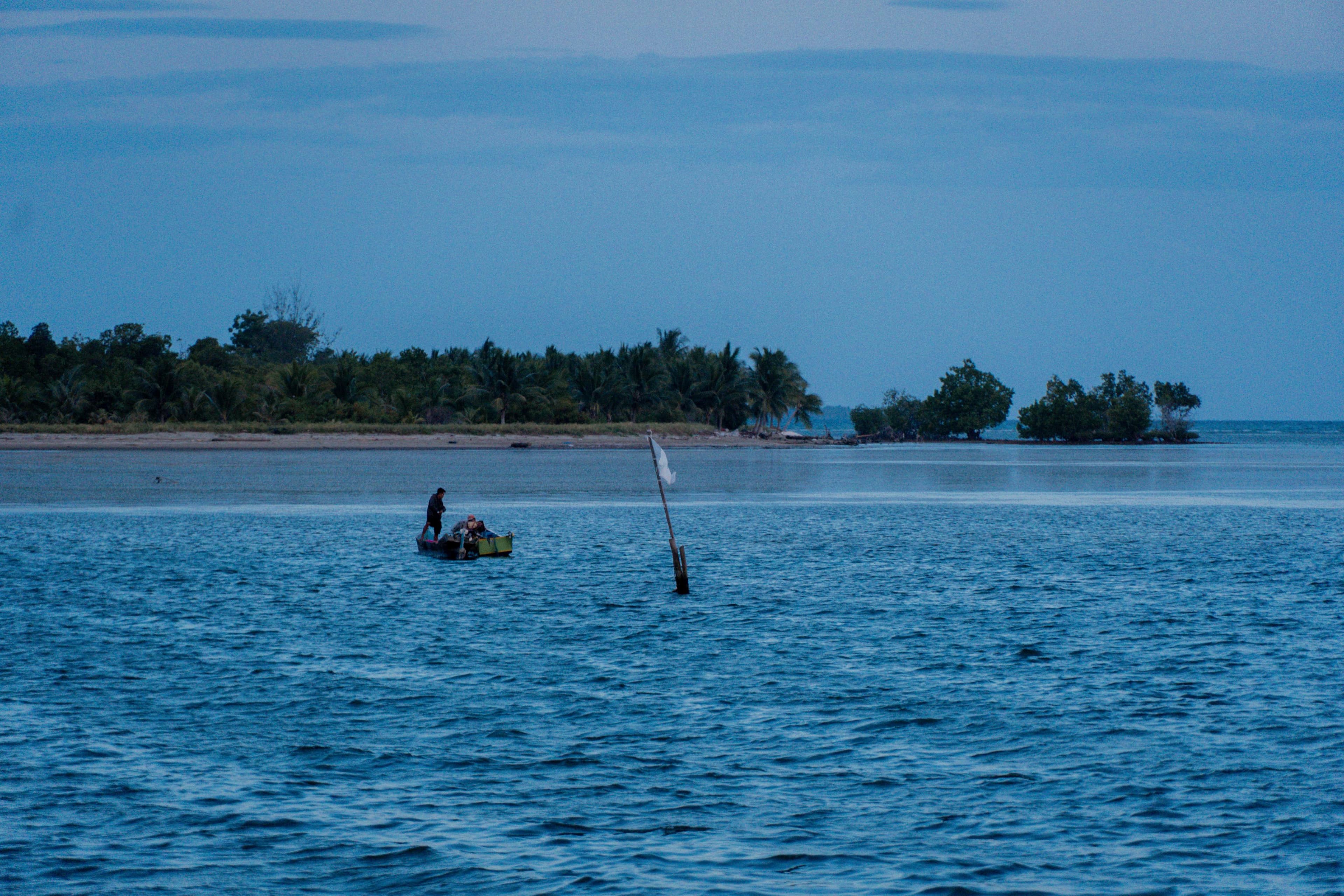
SINAR Institute, Torosiaje field visit, 2026
Look out across the water surrounding the settlement of Torosiaje and you will notice them long before you reach the intricate wooden walkways. White pieces of cloth break the distant horizon line. They are suspended exactly two meters above the surface of the sea. The poles holding them vanish completely beneath the waves, anchored deep into the ocean floor. To a casual observer visiting this coastal environment for the first time, these markers might look like random fishing boundaries or discarded maritime debris. They appear completely ordinary. Yet in a place where the ocean dictates the absolute rhythm of survival, ordinary objects carry profound weight.
A white flag in this community is never just a piece of fabric. It serves as an incredibly precise environmental instrument. The people of Torosiaje use these elevated cloths to read the wind. In a stilt village hovering entirely over the sea, the wind is not merely a passing weather condition but a governing force. It decides whether a fisherman can safely head out to secure the daily catch. It determines exactly how the water will move against the wooden pillars supporting generations of homes. Knowing the direction and temperament of the breeze is a matter of absolute necessity. The flag translates the invisible currents of the air into a visual language the community can instantly understand.
Beyond serving as a maritime compass, these markers act as a profound declaration of local identity. Pinning a thick wooden pole into the shifting seabed and marking it with white cloth is a powerful way of claiming space in a fluid and unpredictable world. It says that this specific stretch of water is known, navigated, and deeply inhabited. It acts as a spatial signature. The people living here do not just survive on the ocean. They actively interpret it, mapping a vast territory that possesses no permanent roads or concrete borders.
This deep intrinsic knowledge of the environment is precisely what conventional data collection often completely ignores. When external observers arrive to study isolated populations, they frequently bring clipboards filled with predetermined assumptions. They tend to measure distance in kilometers instead of acknowledging tidal shifts. They calculate income without ever looking at the flags that dictate whether anyone can actually work that day. But health cannot be separated from the geography, livelihood, culture, and environment that shape a daily existence. If you want to genuinely understand the physical and social well being of Torosiaje, you cannot ignore the wind. You cannot ignore the instruments the community built to survive it.
Consider what happens when the white cloth snaps violently in a harsh gale. That frantic movement signals far more than approaching bad weather. It instantly alters the reality of healthcare access. If the wind becomes too dangerous, small boats cannot safely cross the open water to reach the mainland. A routine trip to a medical clinic suddenly becomes impossible. The nearest supply of essential medicine becomes entirely out of reach. In those moments, a simple white flag standing in the water serves as an immediate indicator of medical vulnerability. This is the exact reason why generalized statistics fail populations living in geographically isolated settings. A broad national survey will never ask a community about the wind.
SINAR Institute exists to generate locally grounded evidence that captures these exact structural realities. We firmly believe that communities must be represented as partners in knowledge, holders of lived experience, and active contributors to research. The people who know exactly how to read the offshore flags hold the true expertise of their environment. Extracting data without stopping to understand how they navigate their daily world leads to interventions that look promising on paper but fail completely in practice. We have to start listening to the reality of an environment before we start measuring its outcomes.
Recognizing the importance of a flag two meters above the sea is fundamentally about acknowledging human agency. It proves that the community possesses immense resilience and intelligence. They are not waiting passively for outside assistance. They have engineered incredibly effective ways to read the natural world to protect their families and sustain their livelihoods. True scientific inquiry does not look down on these traditional methods. It respects them deeply. It seeks to understand how deeply embedded environmental knowledge shapes human development. Overlooked realities must become visible, measurable, scientifically understood, and ethically documented.
Translating evidence into community impact requires us to pay close attention to the simplest things. The most meaningful insights rarely come from sterile laboratories or distant academic offices. They come from observing the water, talking to the people who anchor the poles into the seabed, and realizing that every single element of their built environment has a distinct purpose. Behind every data point is a life. And in Torosiaje, the lives behind the numbers are guided by the white cloth catching the ocean breeze.
When we build research models, we must design them to see the whole picture. We must look past the obvious elements and ask what the community truly values. The moment we recognize that a piece of fabric tied to a wooden pole is actually a critical piece of infrastructure, we finally begin to do research the right way. We stop bringing assumptions. We start learning. We stop treating people as passive subjects. We start treating them as teachers. Only then can we generate evidence that actually holds value.