Why Coastal Communities Need Locally Grounded Evidence
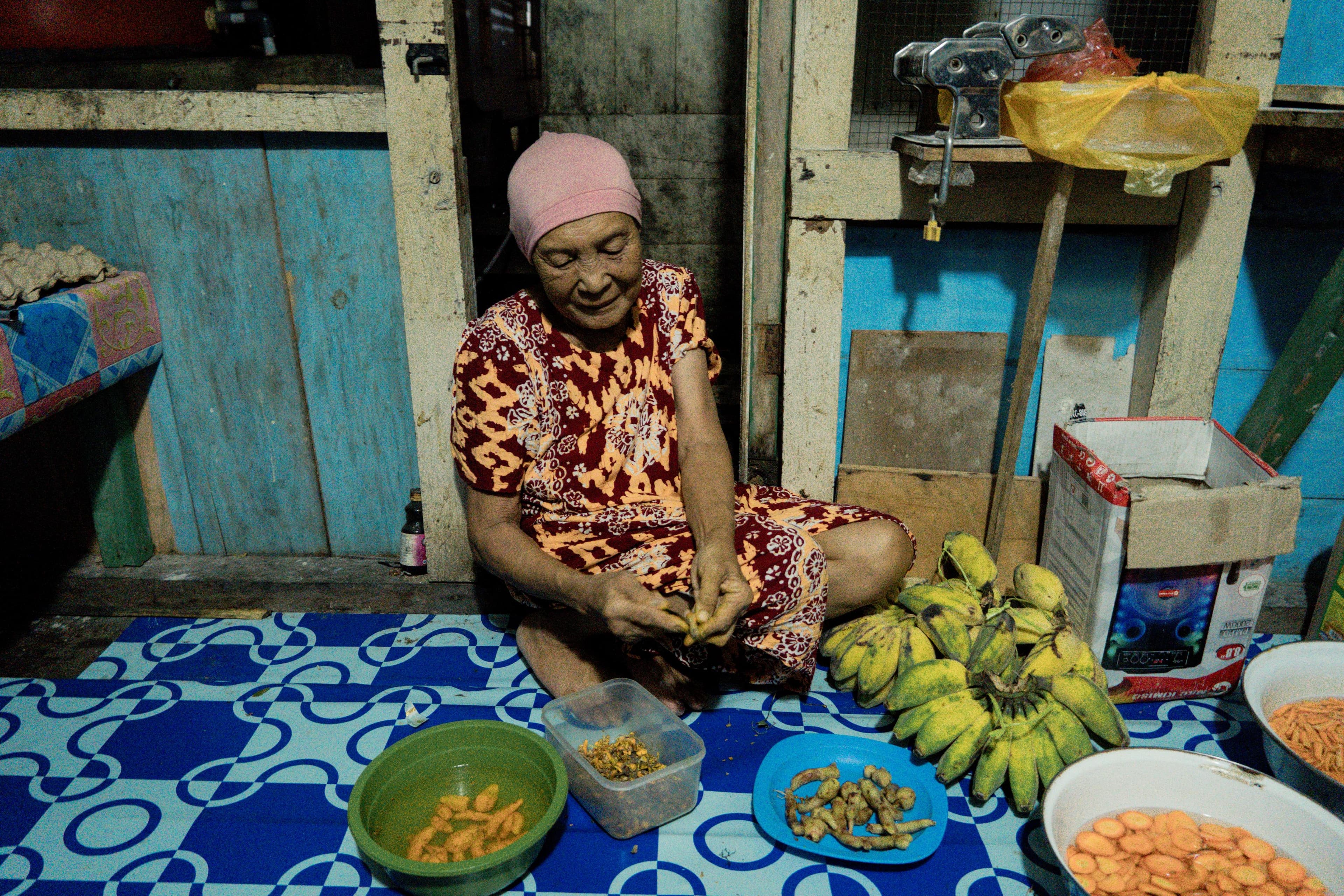
SINAR Institute, Torosiaje field visit, 2026
When health data is collected at the national or provincial level, coastal communities are rarely visible as a distinct group. They appear as part of broader rural statistics, averaged into figures that may not reflect their specific realities. The distance from a health facility means something entirely different when the only route involves a boat crossing completely at the mercy of the weather. Medication access looks fundamentally different when the nearest pharmacy sits two hours away. Child nutrition data shifts radically when household income depends entirely on the unpredictable rhythms of fishing seasons. These are not edge cases. They are structural features of coastal life that standard health surveys are rarely designed to capture.
Relying on generalized numbers creates a dangerous blind spot in public administration and medical care. Health cannot be separated from the geography, livelihood, culture, and environment that shape a daily existence. If we base medical and social responses on assumptions drawn from mainland demographics, populations living over the water remain completely invisible. Policies drafted in urban centers often miss the actual needs of geographically isolated people, resulting in critical resources that simply never reach the individuals who need them most. To build truly equitable systems, we have to recognize that these communities are not merely defined by their limited access. They are groups possessing distinct cultures, profound resilience, and deeply valuable lived experiences. Extracting statistics from them without understanding the surrounding environment helps no one.
This fundamental disconnect is exactly why locally grounded evidence is an absolute necessity. We have to start listening to the reality of an environment before we start measuring its outcomes. In places like Torosiaje, the ocean itself is a primary determinant of well being. Traditional epidemiological models might count the frequency of an illness, but they frequently fail to ask how the changing tides or the specific occupational hazards of life on a stilt village contribute to that exact disease pattern. Documenting these unique exposures requires methodologies that are scientifically sound yet highly adaptable to the physical space. It requires viewing the community not as a passive source of statistics, but as an active partner in generating meaningful knowledge.
SINAR Institute began its foundational work in Torosiaje because we believed that locally grounded evidence collected alongside the community and eventually returned to them in a useful format could produce something vastly more meaningful than extrapolated national averages. We firmly reject the historical practice of conducting one time data extraction. Our core intention is to establish real world evidence that translates directly into better understanding and highly responsible action.
The findings from TIDE 2026 will not answer every single historical question or resolve structural inequality overnight. But they will give Torosiaje a baseline. A starting point. A robust set of locally verified numbers that describe health conditions exactly as they exist in that community at this exact point in time. Evidence becomes a powerful tool only when it accurately reflects the people behind the numbers. By ensuring that these overlooked realities are scientifically understood and ethically documented, we begin to lay the groundwork for a future where clinical pathways genuinely align with the true needs of coastal populations. That is where responsible action begins.